Home › Sports Hypnotherapy Melbourne › Sports Hypnosis Beyond Confidence
Sports Hypnosis Beyond Confidence
Sports hypnosis is often used for confidence, relaxation, motivation and performance anxiety, and it can also be used to support mental rehearsal of a specific movement. The two uses address different problems.
Which use applies if I become anxious in competition?
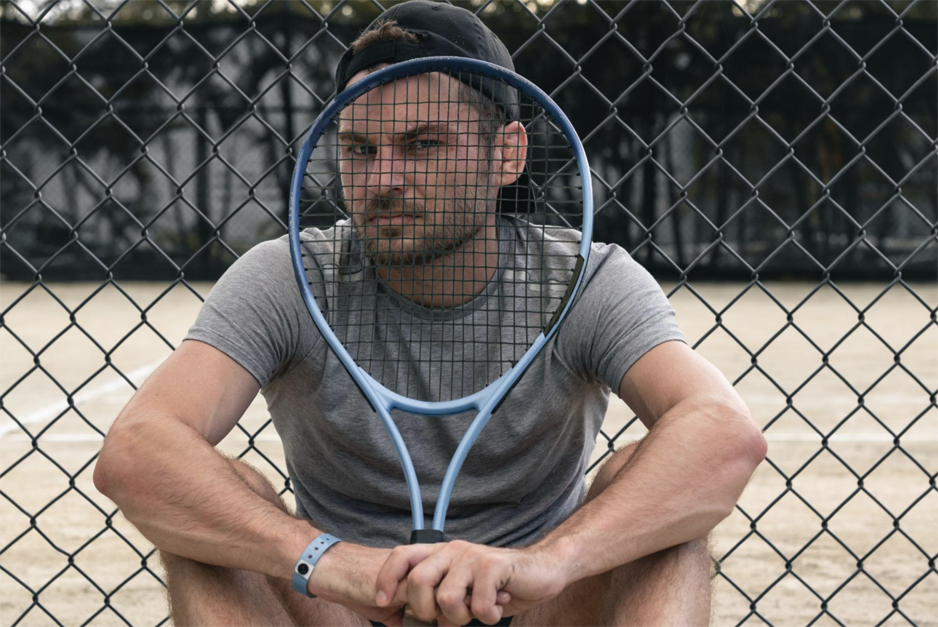
Take a tennis player who tightens up on the important points. I help that player build ways to manage pressure, keep attention on the task and recover quickly after a mistake. This is work on the mental side of performance, and it holds whatever your technique looks like. Calm, focused attention on the big points is a skill, and it can be trained.
Which use applies if I am changing my technique?
Now take the same player working with a coach to refine a serve. The coach sets the target: a particular sequence, rhythm or body position. You rehearse that instructed movement in trance, on its own or alongside the work on pressure, and every time your coach adjusts the instruction, I adjust the rehearsal. The movement your coach wants becomes the movement you own.
How do you know which one you need?
If you perform well in training and lose it in competition, we start with anxiety and attention. If you are steady in competition and working on a technical change, we start with rehearsal. Most athletes gain from both, and your first sessions show us the right order.
What does the evidence show?
Mental practice improves performance (Driskell, Copper and Moran, 1994). For hypnosis in sport, the systematic review by Miró and colleagues found it associated with better performance, better injury recovery and lower psychological distress, and Pelka and colleagues (2016) found hypnosis among the most effective relaxation techniques across a range of performance measures.
Two controlled studies combined cognitive methods with hypnosis, and both found better performance. Howard and Reardon (1986) randomly assigned 32 male weightlifters to four conditions over four weeks, and the cognitive-hypnotic-imagery approach beat every other condition, including hypnosis alone. In a trial of 30 players aged 14, eight sessions of group cognitive behavioural therapy with hypnosis and positive imagery produced better performance than a control group on shooting to a target, fixed passing and moving passing (Hormozgan Medical Journal, 2018). Cognitive methods together with hypnosis is how I work.
Sports hypnotherapy in Melbourne
At 1You in Caulfield North, I work with athletes on both: composure under pressure, and rehearsal of the movement your coach wants. See sports hypnotherapy in Melbourne for how it works, or hypnotherapy in Caulfield North for the practice location.
Try this before your first appointment
For one week, note each time your performance drops, whether in training or competition, and what you were thinking just before. The record shows us straight away where to start.
Ready to start?
Book a first session and bring your coach’s instruction if you have one. We will build your plan from it!
See sports hypnotherapy in Melbourne for how I work with athletes, or hypnotherapy in Caulfield North for the practice location.
Try this before a first appointment
For one week, note each time your performance drops, whether in training or in competition, and what you were thinking just before. The record often helps show which of the two uses applies.
Research & Further Reading
- Driskell, J.E., Copper, C. and Moran, A. (1994). Does mental practice enhance performance? Journal of Applied Psychology, 79(4), 481 to 492.
- Mir m, A., Mesperuza, M., Jensen, M.P., Day, M.A., Garca, F. and Mir, J. Therapeutic hypnosis and sports performance: a systematic review. International Review of Sport and Exercise Psychology.
- Pelka, M., Heidari, J., Ferrauti, A., Meyer, T., Pfeiffer, M. and Kellmann, M. (2016). Relaxation techniques in sports: a systematic review on acute effects on performance. Performance Enhancement and Health, 5(2).
- Howard, W.L. and Reardon, J.P. (1986). Changes in the self concept and athletic performance of weight lifters through a cognitive-hypnotic approach: an empirical study. American Journal of Clinical Hypnosis, 28(4), 248 to 257.
- Efficacy of cognitive behavior therapy with positive imagination of success during hypnotism on athletic performance. Hormozgan Medical Journal. (2018), 22(4). doi:10.5812/hmj.86481
More in this series
- Is There a Perfect Technique in Sport?
- Practice Makes Permanent: Why Instruction Matters
- Hypnosis and Mental Rehearsal for Athletes
- How Small Gains Add Up: A Marathon Calculation
- Build a Mental Rehearsal Plan for Your Sport
To find out whether this approach suits your sport, see sports hypnotherapy in Melbourne.
Part of the series on mental rehearsal in sport. Return to the guide.