Home › Sports Hypnotherapy Melbourne › Hypnosis and Mental Rehearsal for Athletes
Hypnosis and Mental Rehearsal for Athletes
Hypnosis provides a structured setting for mentally rehearsing a movement a coach has taught, and studies of hypnosis in sport report improved performance, including in motor skill learning.
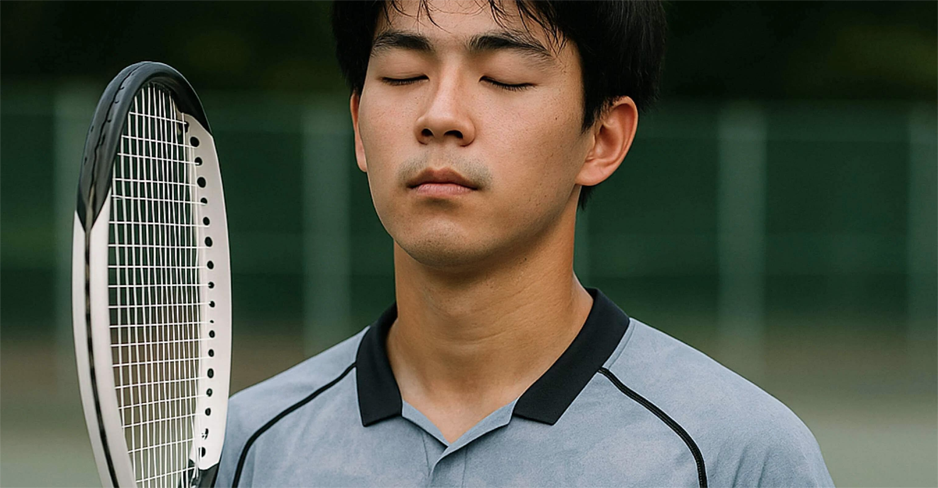
What is mental rehearsal of a movement?
Athletes often visualise winning or crossing the finish line. Mental rehearsal goes further and works on the movement that produces the result, and adds hypnosis to the picture. You imagine the movement from your own perspective, attending to sequence, timing, rhythm, balance and bodily sensations. A tennis player rehearses the preparation, toss, rotation and follow-through of a serve. A runner rehearses a controlled rhythm, and a golfer the sequence and tempo of a swing. The imagery comes straight from the instruction your coach has given you, so the rehearsal reinforces exactly what your coach wants.
Where does the idea come from?
Rehearsal under trance is not a new protocol. It adapts a principle found across the Chinese martial arts, including Tai Chi and kung fu, in which fast, precise movements are practised slowly, with attention on the breath and on what the tradition calls the flow of chi. Lau Gar kung fu sifu Shan Lau, author of Kung Fu, The Theory of Force, describes this slow, focused repetition as the way a movement becomes embedded. Trance applies the same logic to the sports skill, with the added step of rehearsing the adjustments your coach has identified.
Step 1: Agree on one technical objective
Start with your coach. Choose one movement, or one part of your technique, that you are working to improve, specific enough to rehearse and to see. It might be the sequence of a golf swing, the rhythm of a tennis serve or one element of a swimming stroke. Your coach decides what to work on, and I build the rehearsal around it.
Step 2: Define the intended movement
You and I establish exactly what your coach wants practised, including the sequence, timing, rhythm and the bodily sensations that go with it. If any part of the instruction needs sharpening, we take it back to your coach first, so the rehearsal starts from a clear picture.
Step 3: Rehearse under hypnosis
In a guided session, you imagine the movement repeatedly with deep focus. You rehearse from a first-person perspective, attending to the sequence and sensations that matter for the task, and you practise the instructed process as well as the successful result. Schuster and colleagues (2011) found that the successful imagery interventions in their review were typically added after physical practice, so the best time to rehearse is after a physical session, building on what you have just done.
Step 4: Return to physical practice
Take the movement back to training. Your coach watches, gives feedback and confirms that the change is taking hold, and what you see and feel in practice shapes the next rehearsal.
Step 5: Review and refine
Each rehearsal builds on the last. When your coach adjusts the instruction, the rehearsal updates with it, and when something is working, we do more of it.
Step 6: Measure your progress
Where you can, you and your coach choose a measure in advance, such as consistency, accuracy, timing or another outcome for your sport. Numbers give you proof of progress, and they show you where to push next.
What does one cycle look like?
A tennis player’s coach asks for a more forward toss on the serve. The coach demonstrates the change, and the player practises it on court. After the session, the player and I rehearse the toss and the movement that follows it, using the coach’s description. At the next lesson the coach reviews the serve, notes the more consistent toss and refines the instruction, and the rehearsal updates to match. The measure agreed beforehand, perhaps the proportion of first serves landing in, is recorded before and after each cycle.
The cycle runs from instruction to physical practice, feedback, mental rehearsal, physical testing and refinement. It repeats as new information arrives, and each stage builds on the one before.
Why measure every change?
Every adjustment earns its place against your actual performance. You keep what works, build on it and move on to the next improvement.
Where to start
One movement, one adjustment and one measure. Rehearsal works alongside your training, coaching and recovery, and adds a layer of preparation to each.
Ready to start?
Bring your coach’s instruction to a first session and we will build your rehearsal from it. See sports hypnotherapy in Melbourne to book.
Where does the idea come from?
Rehearsal under trance is not a new protocol. It adapts a principle found across the Chinese martial arts, including Tai Chi and kung fu, in which fast, precise movements are practised slowly, with attention on the breath and on what the tradition calls the flow of chi. Lau Gar kung fu sifu Shan Lau, author of Kung Fu, The Theory of Force, describes this slow, focused repetition as the way a movement becomes embedded. Trance applies the same logic to the sports skill, with the added step of rehearsing the adjustments your coach has identified.
What does hypnosis add?
Hypnosis gives you a state of deep focus in which imagery becomes vivid and easy to hold. Away from the distractions of training, you work through the movement repeatedly, with your attention on its key components, and I adjust the rehearsal each time your coach gives new feedback.
In a session, we start from what your coach has asked for and agree how the movement will be described. I then rehearse it with you in trance, often tying a simple cue to one point in the movement. One tennis player who kept double faulting on match points used the image of a green light at the peak of the toss as his cue to release the serve. His results improved over eight weeks of sessions, and he reported that his serving had improved. I also work on thoughts that interfere, replacing a warning such as do not fault with an action such as swing free.
What does the research show?
Mental practice improves performance. The meta-analysis by Driskell, Copper and Moran (1994) found a positive and significant effect, and the review by Schuster and colleagues (2011) found motor imagery beneficial when combined with physical practice. A meta-analysis of 17 studies found that imagery and hypnosis based mental preparation improved both performance and flow.
The evidence for hypnosis in sport is building. Miró and colleagues reviewed 13 studies and found hypnosis associated with better athletic performance, better injury recovery and lower psychological distress. Franquelo and colleagues (2022) reviewed 45 studies, and most reported positive effects of hypnosis compared with other techniques. Pelka and colleagues (2016) reviewed 21 randomised trials and found hypnosis among the most effective techniques across a range of performance measures.
The individual trials are specific. In a randomised study of 59 collegiate soccer players, three sessions of hypnosis improved wall-volley performance and confidence, and the difference was still there four weeks later (Barker, Jones and Greenlees, 2010). A single 10-minute hypnotic session focused on the target improved overhand throwing accuracy, and the gain was still present five to eight days later while a control group stayed at their pre-test level (Jalene and Wulf, 2014). In a randomised study of 20 university basketball players, the hypnosis group improved free throw percentage significantly more than the control group, with a large effect size (Muñoz-Avendaño and colleagues, 2024).
How does it fit with your training?
Your coach sets the technical objective, I help you rehearse it in trance, and you take it back to training. Each stage feeds the next, so the rehearsal sharpens as your technique does.
Will my performance improve?
If you do the work, and I have the right instruction from your coach, I will give you your money back if it does not.
What should I ask a sports hypnotherapist?
Ask what instruction the rehearsal is built on, who gave it and what measure will show the result. At 1You the answers are your coach's instruction, your coach, and a measure we agree before the first session.
Ready to start?
Bring your coach's instruction to a first session and we will build your rehearsal from it. See sports hypnotherapy in Melbourne to book.
Research & Further Reading
- Driskell, J.E., Copper, C. and Moran, A. (1994). Does mental practice enhance performance? Journal of Applied Psychology, 79(4), 481 to 492.
- Schuster, C. et al. (2011). Best practice for motor imagery: a systematic literature review on motor imagery training elements in five different disciplines. BMC Medicine, 9, 75. doi:10.1186/1741-7015-9-75
- Metaanálisis: efectos de técnicas de preparación mental basadas en imaginería e hipnosis sobre flow y rendimiento deportivo. Pensar en Movimiento (2020), 18(1). doi:10.15517/pensarmov.v18i1.39287
- Miró, A., Mesperuza, M., Jensen, M.P., Day, M.A., García, F. and Miró, J. Therapeutic hypnosis and sports performance: a systematic review. International Review of Sport and Exercise Psychology.
- Franquelo, M.A., Hernández-Mendo, A. and Capafons, A. (2022). Eficacia de la hipnosis en psicología del deporte: una revisión sistemática. Cuadernos de Psicología del Deporte, 22(1), 81 to 99. doi:10.6018/cpd.481041
- Pelka, M. et al. (2016). Relaxation techniques in sports: a systematic review on acute effects on performance. Performance Enhancement and Health, 5(2). doi:10.1016/j.peh.2016.05.003
- Barker, J., Jones, M. and Greenlees, I. (2010). Assessing the immediate and maintained effects of hypnosis on self-efficacy and soccer wall-volley performance. Journal of Sport and Exercise Psychology, 32(2), 243 to 252.
- Jalene, S. and Wulf, G. (2014). Brief hypnotic intervention increases throwing accuracy. International Journal of Sports Science and Coaching, 9(1), 199 to 206.
- Muñoz-Avendaño, M. et al. (2024). Efecto de la hipnosis y mindfulness sobre el rendimiento deportivo en baloncesto. Cuadernos de Psicología del Deporte, 24(3), 145 to 161. doi:10.6018/cpd.584861
More in this series
- Is There a Perfect Technique in Sport?
- Practice Makes Permanent: Why Instruction Matters
- How Small Gains Add Up: A Marathon Calculation
- Sports Hypnosis Beyond Confidence
- Build a Mental Rehearsal Plan for Your Sport
To find out whether this approach suits your sport, see sports hypnotherapy in Melbourne.
Part of the series on mental rehearsal in sport. Return to the guide.