
Weight Loss
Why Pausing Between Mouthfuls Helps You Eat Less and Enjoy More
Your gut needs time to tell your brain that food has arrived. A small pause between mouthfuls has a real effect.
Read Article →Evidence-based articles exploring anxiety, behavioural change, neuroscience, subconscious processes, Clinical Hypnotherapy, Strategic Psychotherapy, and emotional wellbeing.
Long-form evidence-based articles exploring emotional regulation, anxiety, neuroscience, subconscious processes, behavioural conditioning, and therapeutic change.
Your gut needs time to tell your brain that food has arrived. A small pause between mouthfuls has a real effect.
Read Article →
How Sports Hypnotherapy and 'Perfect Practice' can increase performance and reduce injuryin sports
Read Article →
How the mind's protective system can become oversensitised after trauma, much like an allergy, and how cognitive behavioural hypnotherapy helps retrain it back to accuracy.
Read Article →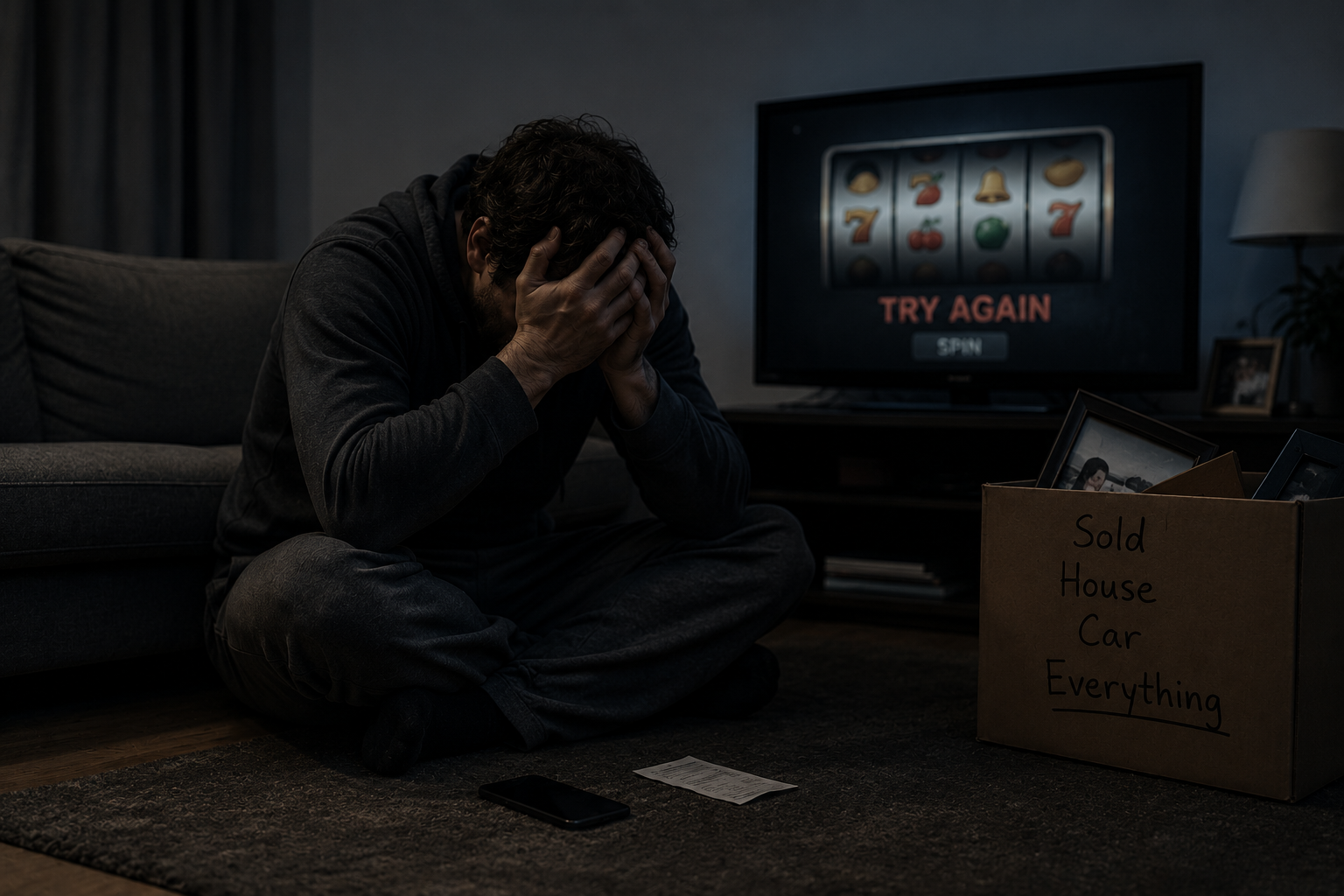
Gambling addiction is rarely just a dopamine chase. This article looks at the stress hormone changes behind problem gambling, how near misses and unpredictable wins train the brain's reward system, and the cognitive distortions that keep people at the table. Illustrated by a true anonymised case, it explains how Cognitive Behavioural Hypnotherapy addresses both the stress response and the beliefs that sustain the cycle.
Read Article →
When we avoid the things that make us anxious, we feel instant relief. That relief is real, but it comes at a cost. This article explains why avoidance teaches the brain the wrong lesson, how safety behaviours quietly maintain fear, and why even worry itself is a form of avoidance. Drawing on research by Mowrer, Salkovskis, and Craske, it outlines how Cognitive Behavioural Therapy and Clinical Hypnotherapy work together to help people move through anxiety rather than around it.
Read Article →
This article explores depression and persistent sadness through psychology, neuroscience, philosophy, and evolutionary theory. It argues that modern life places chronic stress on brains designed for survival, not constant stimulation and social pressure. The piece examines how unresolved cognitive dissonance, negative self-narratives, and a lack of meaning can contribute to depression. Drawing on concepts from Cognitive Behavioural Therapy and Viktor Frankl’s logotherapy, it suggests that emotional suffering often reflects deeper contradictions between values, behaviour, and purpose. The article concludes with practical strategies for recovery, including resolving inner conflicts, restoring physical wellbeing, seeking connection, and finding meaning beyond oneself
Read Article →
Exploring subconscious identity, emotional meaning-making, self-narrative, and the stories that shape human behaviour, emotional suffering, and psychological patterns.
Read Article →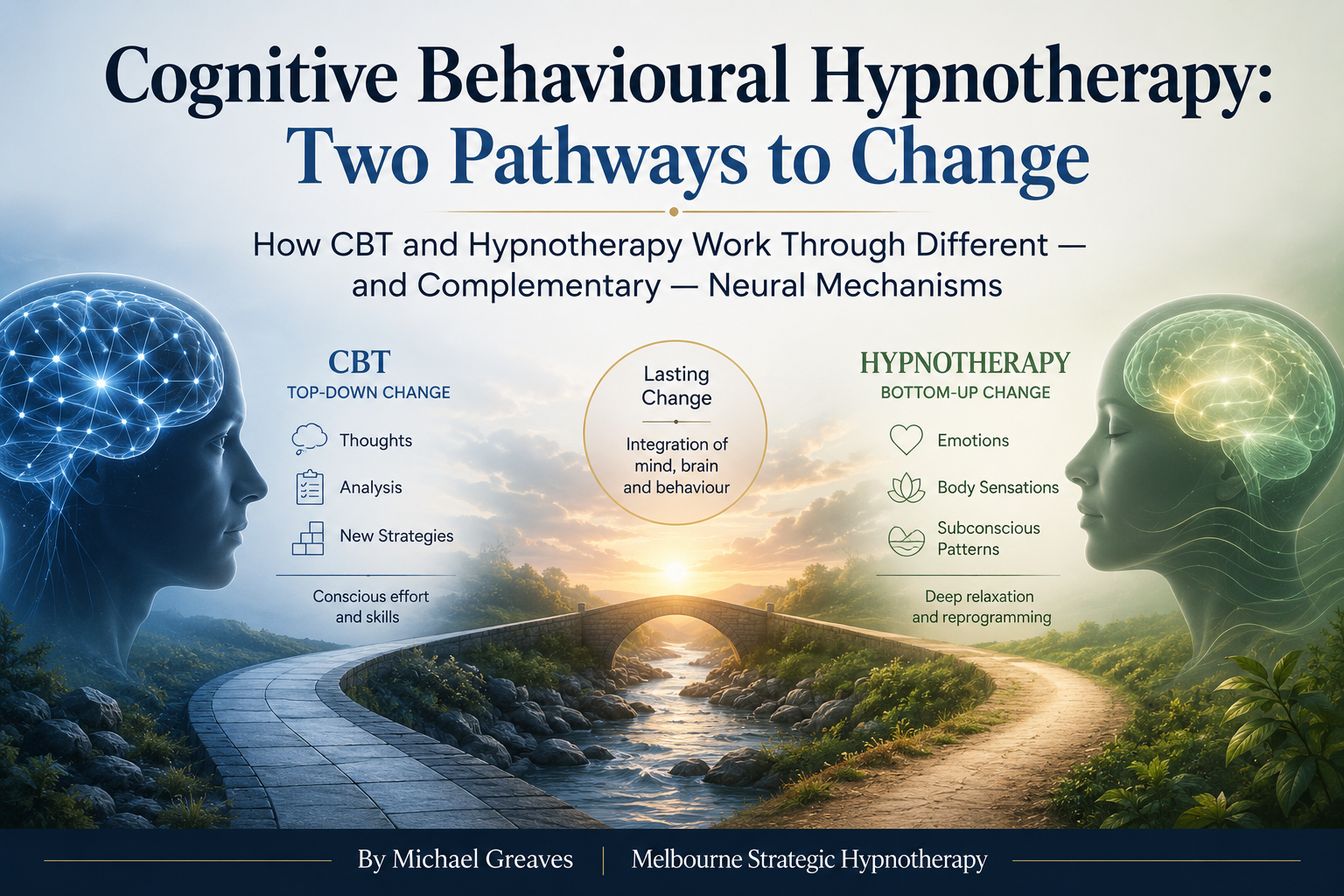
Cognitive Behavioural Hypnotherapy (CBH) is an evidence-based integrative model that combines Cognitive Behavioural Therapy (CBT) with clinical hypnosis. While both components share a common goal — helping individuals identify and modify unhelpful patterns of thinking, feeling, and behaving — they achieve this through fundamentally distinct neurological pathways. Understanding how each component works at a neurobiological level helps explain why their integration is more powerful than either treatment alone.
Read Article →
Our brains evolved powerful defensive mechanisms around being right. Not just the dopamine reward for accuracy
Confirmation bias (we seek out information that supports what we already believe)
Selective memory (we remember times we were right more than times we were wrong)
Motivated reasoning (we're incredibly creative at finding reasons our beliefs are correct)
Defensive anger (we attack when our beliefs are challenged)

If you are struggling with anxiety in Melbourne, you’ve likely been told that it’s a medical condition you have to "manage." But after years of clinical practice, I’ve found a different truth: Anxiety isn't just something you have; it is a process you do. Specifically, it is a mental habit that the mind has become addicted to.
Read Article →Melbourne Strategic Hypnotherapy provides evidence-based Clinical Hypnotherapy and Strategic Psychotherapy for anxiety, emotional regulation, behavioural change, chronic stress, sleep issues, and performance optimisation.
Book a Consultation